
Anthropic ships self-hosted sandboxes + MCP tunnels for Claude Managed Agents
Code with Claude London closes a two-day tour by giving enterprises the answer they've been blocking on: keep your data and your network inside your firewall while still using Claude as the agent brain.
Anthropic ships self-hosted sandboxes + MCP tunnels for Claude Managed Agents
Code with Claude London closes a two-day tour by giving enterprises the answer they've been blocking on: keep your data and your network inside your firewall while still using Claude as the agent brain.
- Self-hosted sandboxes (public beta): the agent loop stays on Anthropic infra, but every tool call — file reads, API hits, code execution — runs inside the customer's environment.
- Managed providers supported on day one: Cloudflare, Daytona, Modal, Vercel.
- MCP tunnels (research preview): a lightweight gateway you deploy inside your network opens a single outbound connection. Internal DBs, knowledge bases, ticketing become Claude tools without public endpoints.
- Tunnels work in both Managed Agents and the Messages API; managed from workspace settings in the Claude Console by org admins.
This is the move that unlocks Claude for regulated industries — legal, financial services, defense — and it directly addresses the Pentagon×Anthropic friction by giving security teams an air-gap-friendly answer. The single-outbound-connection design is the part that matters: most enterprise security teams will refuse anything that needs an inbound firewall hole.
Implications: The "agent connectivity layer" Anthropic just expanded (after acquiring Stainless earlier this week) is becoming a durable moat. Expect OpenAI/Google to ship comparable self-hosted sandbox stories within a quarter, but tunnels-first MCP is harder to copy because the protocol is Anthropic-anchored.

Cursor Composer 2.5 ships — claims Opus 4.7 / GPT-5.5 parity at $0.50 per million input tokens
Cursor's in-house frontier model bets the wedge is being 20× cheaper than Opus while matching it on SWE-Bench Multilingual.
Cursor Composer 2.5 ships — claims Opus 4.7 / GPT-5.5 parity at $0.50 per million input tokens
Cursor's in-house frontier model bets the wedge is being 20× cheaper than Opus while matching it on SWE-Bench Multilingual.
- Shipped May 18 inside Cursor 3 "Glass" — the same release that replaced Composer-in-editor with the standalone Agents Window.
- Matches Claude Opus 4.7 and GPT-5.5 on SWE-Bench Multilingual per Cursor's own evals; independent reviewers report comparable real-world coding performance on long tasks.
- Pairs with /worktree and /best-of-n classic-editor commands plus parallel cloud agents.
- Cursor sustained ~7M MAU and ~$20B ARR signals reported across May; Composer 2.5 is the bet on capturing margin from foundation labs.
Cursor is now playing two games at once: distributing other labs' frontier models inside its IDE, and selling a cheap in-house model that's "good enough" for the long tail of refactors and multi-file edits. Composer 2.5 is the bet that the second game pays for the first.
Implications: If Composer 2.5 sticks, every IDE will ship a house model in 2026 — Windsurf, JetBrains and even Microsoft are visibly moving this way. The "frontier on demand" tier becomes a premium add-on rather than the default.

Mistral Medium 3.5 + Vibe Remote Agents — 128B open-weight at 77.6% SWE-Bench Verified
Open-weight is now within striking distance of closed frontier on real coding work — and Mistral pairs it with cloud-hosted async coding agents.
Mistral Medium 3.5 + Vibe Remote Agents — 128B open-weight at 77.6% SWE-Bench Verified
Open-weight is now within striking distance of closed frontier on real coding work — and Mistral pairs it with cloud-hosted async coding agents.
- 128B dense open-weight model, modified MIT license; available on Hugging Face for self-hosting.
- API pricing: $1.50/M input, $7.50/M output via Mistral — roughly 30% the cost of top closed models.
- 77.6% on SWE-Bench Verified — between Devstral 2 and Gemini 3.1 Pro Preview (78.8%).
- Vibe Remote Agents run async coding tasks in isolated cloud sandboxes with native GitHub and Slack integrations.
Mistral's bet is that European and regulated enterprises want frontier-grade coding without sending source through US-only providers. Medium 3.5 is the first open-weight model where the trade-off looks small — within a few SWE-Bench points of the closed leaders, with a self-host fallback when buyers need it.
Implications: "Good enough open weights" is becoming a credible enterprise default for coding. Expect more procurement teams to write Mistral into RFPs as an open-weight option, the way Llama was treated in 2024.

Gemini Spark rolls out — Google's 24/7 proactive AI agent goes live this week
Spark watches your Gmail, Calendar, Docs and Sheets and acts without prompting. The other I/O launches — Gemini Omni video, Daily Brief, Neural Expressive — ship alongside.
Gemini Spark rolls out — Google's 24/7 proactive AI agent goes live this week
Spark watches your Gmail, Calendar, Docs and Sheets and acts without prompting. The other I/O launches — Gemini Omni video, Daily Brief, Neural Expressive — ship alongside.
- Gemini Spark is positioned as a "proactive" agent — surfaces actions instead of waiting for a prompt; available to AI Ultra subscribers in the US this week, wider rollout to follow.
- Demo use cases shown at I/O: parsing card statements for hidden fees, turning meeting notes into polished docs, automating recurring workflows.
- Daily Brief feature combines inbox + calendar + tasks into a prioritized morning digest with suggested next steps.
- Gemini Omni — Google's generative video model — also launched, with cinematic editing from text/image/video inputs.
- New "Neural Expressive" design language across the Gemini app: fluid animations, new typography, haptic feedback.
Spark is Google's answer to ChatGPT agent mode and Claude Managed Agents, but with a different shape: it's always-on and proactive rather than session-based. The Daily Brief feature in particular is a direct shot at AI Daily-style personal briefings, which makes the I/O launch interesting reading for this project's readers specifically.
Implications: If Spark works in production, every assistant — ChatGPT, Claude, Copilot — has to stop being reactive. Reactive UX becomes the lower-tier experience; proactive becomes the premium expectation.
Perplexity becomes the first non-Google company with OS-level Android access on the Galaxy S26
"Hey Plex" replaces "Hey Google" on every S26 unit globally; Bixby now routes web queries through Perplexity's stack.
Perplexity becomes the first non-Google company with OS-level Android access on the Galaxy S26
"Hey Plex" replaces "Hey Google" on every S26 unit globally; Bixby now routes web queries through Perplexity's stack.
- Perplexity preloaded at the OS layer on every Galaxy S26 sold worldwide.
- Voice activation: "Hey Plex" or press-and-hold the side button — same UX slot Google Assistant used to own.
- Bixby uses Perplexity APIs for real-time web search and advanced reasoning; Samsung's first deep platform-level AI deal with a third party.
- Comet browser opens iOS pre-orders; Android Comet ships with cross-tab summarization, voice chat across tabs, built-in ad blocking, Spaces task scheduling.
Samsung's S26 launch is the first time a non-Google AI replaces Assistant at the platform level on Android — a structural distribution win Perplexity could not have built itself. For Perplexity, this is millions of new daily-active users on day one; for Samsung, it's hedging against Google's tightening grip on the OS-level AI experience.
Implications: Google's bargaining position on Android just got more complicated. Watch whether other OEMs (Motorola, OnePlus, Xiaomi) follow with their own third-party AI defaults — the precedent now exists.

OpenAI's ChatGPT Ads Manager opens to all US businesses with CPC bidding
Self-serve ad platform inside ChatGPT — OpenAI is formally an ad-tech company, targeting $2.5B in 2026 ad revenue and $100B by 2030.
OpenAI's ChatGPT Ads Manager opens to all US businesses with CPC bidding
Self-serve ad platform inside ChatGPT — OpenAI is formally an ad-tech company, targeting $2.5B in 2026 ad revenue and $100B by 2030.
- Beta opened May 5; expanded through May to more SMB and agency partners — Dentsu, Omnicom, Adobe, Criteo all integrated.
- CPC bidding, no minimum spend, measurement tools in-portal.
- Initial geos: US, Canada, Australia, New Zealand — ads served to Free and Go tier users only.
- Next-wave pilots: UK, Mexico, Brazil, Japan, South Korea.
OpenAI's stated revenue ambition — $2.5B in 2026, $100B by 2030 — now has a real product behind it. The platform is the latest signal that ChatGPT itself is the destination, not just a layer; OpenAI doesn't need to win search to become a major ad business.
Implications: If ChatGPT ads work at CPC scale, the entire "free tier of conversational AI" becomes ad-supported by default. Watch whether Anthropic and Google ship comparable ad products — the pressure to monetize free chat usage just went up.
BMW commits to Figure 03 at scale — Leipzig pilot starts this summer, Spartanburg expansion locked in
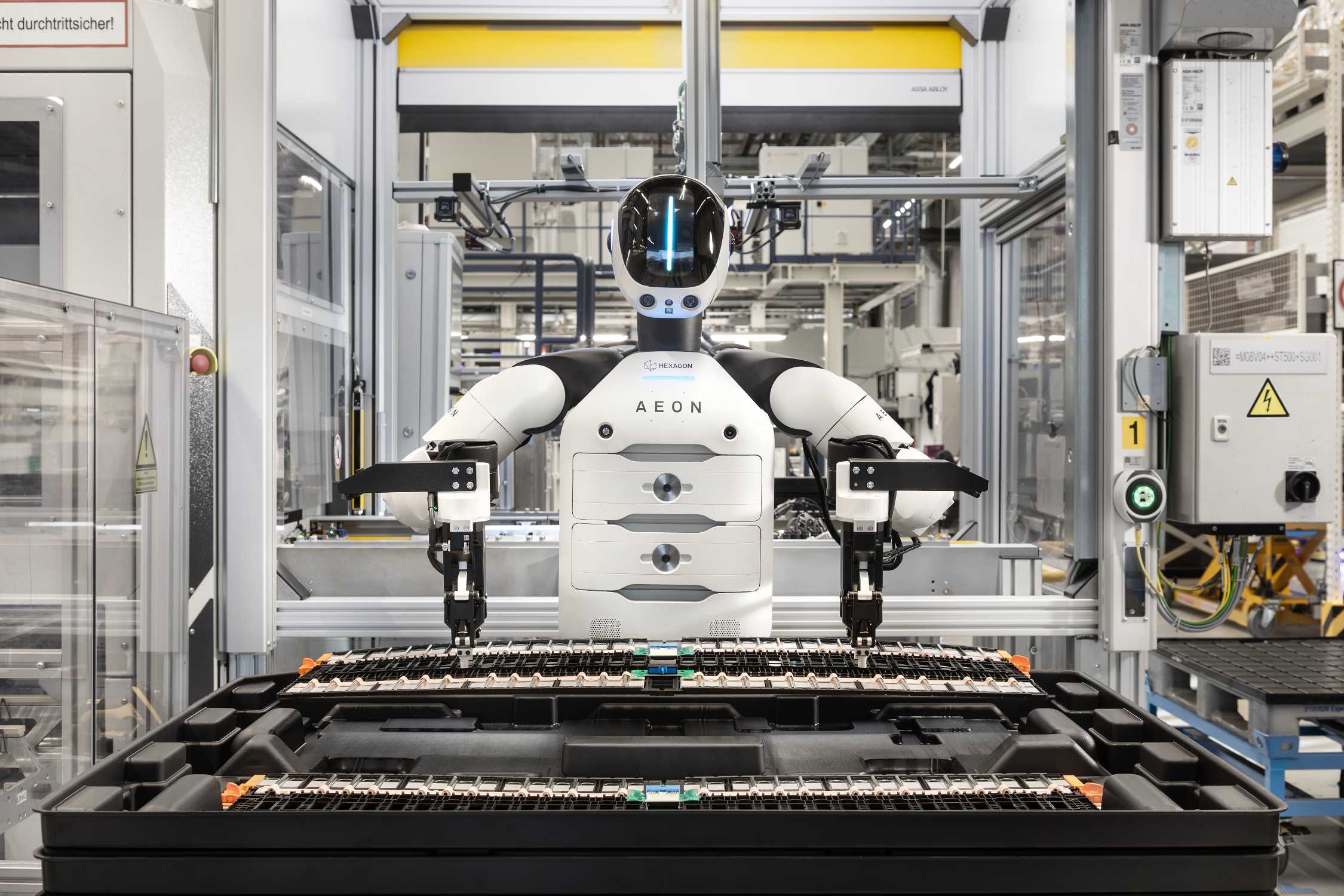
Two Figure 02s logged 1,250 hours and helped build 30,000 X3s. The production-ready 03 fleet now expands through 2027, with the first European humanoid deployment in production starting at Leipzig.
BMW commits to Figure 03 at scale — Leipzig pilot starts this summer, Spartanburg expansion locked in
Two Figure 02s logged 1,250 hours and helped build 30,000 X3s. The production-ready 03 fleet now expands through 2027, with the first European humanoid deployment in production starting at Leipzig.
- 11-month Spartanburg pilot: two Figure 02 units ran 10-hour shifts Monday-Friday, loaded 90,000+ parts, contributed to 30,000 X3 vehicles.
- Figure 03 redesigned the wrist/forearm — the primary failure point in 02 — and now reports motor-controller-direct cabling that eliminated the failure mode.
- Phased rollout to additional Spartanburg workstations through 2026-2027, plus pilot deployments in Munich, Regensburg, Leipzig.
- BMW also setting up a "Center of Competence for Physical AI in Production" to standardize humanoid deployment across plants.
BMW is treating humanoids the way it treats any other production technology: pilot, harden, scale. Figure 03 is the first humanoid version sold with a contracted multi-year scaling commitment — not just a demo agreement. Critically, BMW is publicly tying production output to humanoid contribution, which is rare and gives the rest of the industry a baseline to argue against.
Implications: Humanoids on real production lines is no longer a 2027 story — there's a measurable contribution to a real car model now. Expect competing OEMs (Mercedes, Ford, Stellantis) to announce their own humanoid contracts in the next two quarters or face investor questions.
Tesla converts the Model S/X line at Fremont for Optimus production this quarter
Q2 2026 start with 50-100k year-one capacity; Giga Texas eyes 10M units/year long-term.
Tesla converts the Model S/X line at Fremont for Optimus production this quarter
Q2 2026 start with 50-100k year-one capacity; Giga Texas eyes 10M units/year long-term.
- Fremont starts Optimus production Q2 2026 — Tesla is phasing out the Model S/X lines to make room for first-gen robotics manufacturing.
- Initial Fremont capacity: 50,000-100,000 units/year; plan to deploy several thousand into Tesla's own Gigafactories and select industrial partners by end of 2026.
- Second-gen plant at Giga Texas already breaking ground; long-term target 10M robots/year.
- Optimus v3 reveal still pending — Musk has said it will land "closer to production start."
Tesla is making a structural bet — closing one of its oldest car lines to free space for humanoids. The numbers are still Musk-numbers, but the factory conversion itself is concrete and expensive to reverse. Watch the early industrial partner pilots; that's the real proof point, not the Gigafactory-internal deployments.
Implications: If Tesla hits even the bottom of its capacity range, it's the first humanoid manufacturer shipping at automotive volume rather than pilot volume — a unit-economics inflection that resets every competitor's pricing assumptions.

Wing × Walmart scales drone delivery coast-to-coast — 40M Americans by year-end
150 new Walmart stores across LA, St. Louis, Cincinnati and Miami join Texas and Atlanta — Wing calls it the "world's largest drone delivery expansion."
Wing × Walmart scales drone delivery coast-to-coast — 40M Americans by year-end
150 new Walmart stores across LA, St. Louis, Cincinnati and Miami join Texas and Atlanta — Wing calls it the "world's largest drone delivery expansion."
- 150 additional Walmart stores get drone delivery this year, joining existing service areas in Texas and Atlanta.
- New metros: Los Angeles, St. Louis, Cincinnati, Miami.
- Goods include groceries and general merchandise.
- Walmart-Wing target: 270 US locations by end of 2027, ~40M Americans served by end of 2026.
Drone delivery has cleared the regulatory threshold for everyday consumer use. The Walmart-Wing partnership is now the largest US deployment by volume, which is structurally different from the single-metro pilots that preceded it — this is the moment "drone to your door" stops being a novelty in the South-East and starts being a normal retail expectation across the country.
Implications: Amazon Prime Air, Zipline, Matternet are now visibly behind on commercial scale. Expect either fast follow-on announcements or a wave of M&A in the small-fleet delivery space.
Pentagon's DAWG goes from $226M to $54.6B in the FY27 budget request — a 100× jump
Petraeus & Flanagan call it "the largest single commitment to autonomous warfare in history." Almost all of the money sits in the defense reconciliation package, bypassing normal appropriations friction.
Pentagon's DAWG goes from $226M to $54.6B in the FY27 budget request — a 100× jump
Petraeus & Flanagan call it "the largest single commitment to autonomous warfare in history." Almost all of the money sits in the defense reconciliation package, bypassing normal appropriations friction.
- DAWG (Defense Autonomous Working Group) replaces the Replicator initiative as the Pentagon's unified autonomous-systems program.
- Only $1B of the $54.6B sits in the standard base defense budget — $53.6B comes via the proposed $350B reconciliation package.
- Covers underwater, ground and aerial autonomous systems.
- Joint Chiefs Chairman Gen. Dan Caine: autonomous weapons are "a key and essential part of everything we do."
"The largest single commitment to autonomous warfare in history."
— Gen. David Petraeus (Ret.) & Isaac C. Flanagan
Implications: Defense-AI startups just got a generational TAM expansion. Shield AI ($12.7B), Anduril, Palantir and a long tail of dual-use companies all sit in this slipstream. Watch the reconciliation vote — the funding structure is designed to bypass the normal fall appropriations fight.
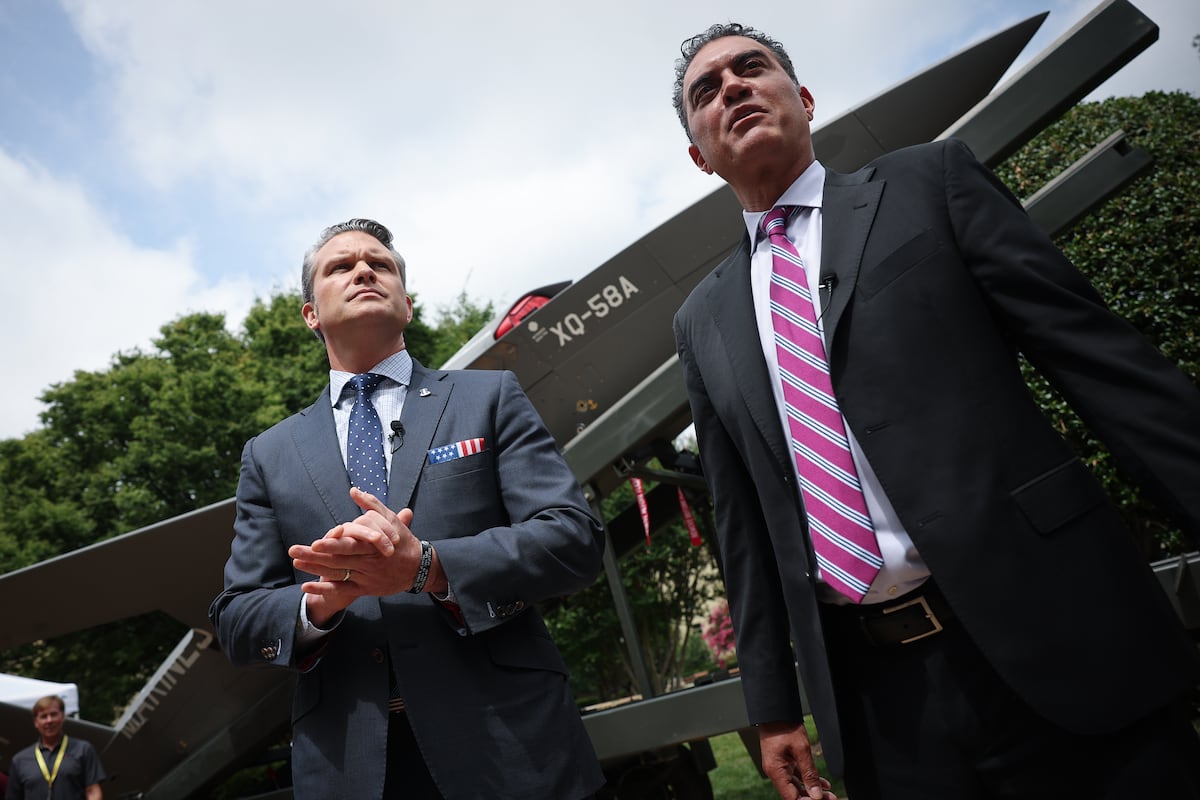
Senators: Pentagon policy isn't keeping pace with autonomous weapons
Bipartisan hearing argues Directive 3000.09's "appropriate levels of human judgment" language no longer matches how AI targeting actually works.
Senators: Pentagon policy isn't keeping pace with autonomous weapons
Bipartisan hearing argues Directive 3000.09's "appropriate levels of human judgment" language no longer matches how AI targeting actually works.
- May 20 hearing surfaced the gap between policy text and operational AI use in targeting.
- Directive 3000.09 (2023) still requires "appropriate levels of human judgment over the use of force."
- Sen. Ernst (R-IA) flagged that the targeting process is increasingly AI-driven, and the directive needs an update.
- Same week as the eight-vendor Pentagon AI contract (May 1) that excluded Anthropic over its safety guardrail demands.
Implications: Vendors with credible safety stories (Anthropic) and vendors with deep DoD relationships (Palantir, Anduril) both gain from a policy update — in opposite ways. Expect a revised directive or supplementary framework before end of FY26.

Ukraine pushes self-deciding drone swarms with Swarmer software — 100-drone tests on the horizon
Coordinated kamikaze swarms now in limited combat use; the trajectory is clear toward AI-cooperative attack formations at scale.
Ukraine pushes self-deciding drone swarms with Swarmer software — 100-drone tests on the horizon
Coordinated kamikaze swarms now in limited combat use; the trajectory is clear toward AI-cooperative attack formations at scale.
- Swarmer's software coordinates groups of drones with minimal operator input.
- Ukrainian forces have already deployed self-deciding swarms in operations; full battlefield rollout still "a few years away" per Ukrainian officials.
- Tests of 100-drone formations expected in the coming months.
- Goal: a few operators can deploy dozens-to-hundreds of attack craft simultaneously, overwhelming defenses.
Ukraine's drone war is now the world's largest live-fire test of autonomous swarming. Today's systems still require humans in the engagement loop, but the trajectory toward AI-cooperative swarms is clear — and Russia is already responding with its own swarming and electronic-warfare countermeasures.
Implications: Whichever side fields cooperative autonomous swarms at scale first sets a doctrinal baseline every other military's procurement will have to match. The Pentagon's $54.6B DAWG request is the US answer.

Starship V3 maiden flight scrubs at T-40 seconds — SpaceX targets Friday evening
A stuck hydraulic pin on the launch tower arm halted Flight 12 just before liftoff, joined by issues on a propellant line, a tower sensor and the water deluge system.
Starship V3 maiden flight scrubs at T-40 seconds — SpaceX targets Friday evening
A stuck hydraulic pin on the launch tower arm halted Flight 12 just before liftoff, joined by issues on a propellant line, a tower sensor and the water deluge system.
- First Starship V3 launch attempt scrubbed Thursday evening May 21 after multiple holds at T-40s.
- SpaceX cited a propellant line on the spacecraft, a tower sensor, water deluge anomaly and a stuck hydraulic pin on the launch tower arm.
- Mission profile: deploy 20 Starlink simulator satellites on a sub-orbital trajectory, with two modified Starlinks scanning the heat shield from outside.
- Next launch window: Friday May 22, 6:30 PM EDT, 90-minute window closing at 8:00 PM EDT.
Flight 12 is the debut of the larger, more powerful Starship V3 — the version SpaceX believes will carry crew and large payloads to the Moon and Mars. Scrub culture is part of the program, but the timing matters: SpaceX is preparing for an IPO and Flight 12 is its biggest 2026 milestone.
Implications: Each delay slips the manifest for Artemis and commercial Starship payloads, and investors are watching closely with the IPO on the horizon. A clean Friday flight would re-anchor the program narrative; another scrub starts to compound.
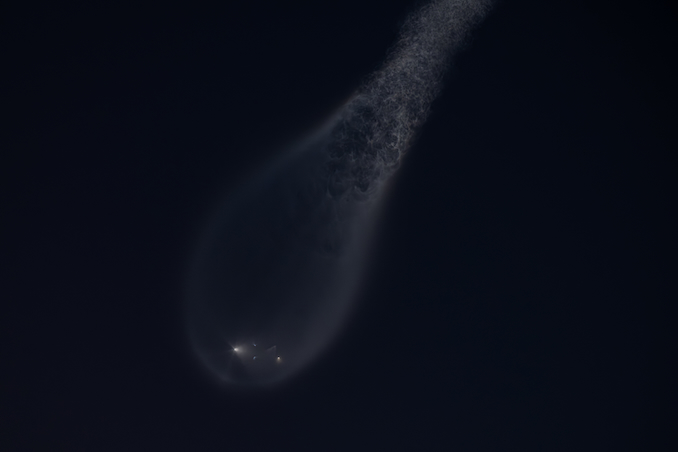
Falcon 9 puts 29 more Starlinks into orbit from Cape Canaveral on the same scrub night
Operational cadence shrugs at Starship's scrub — back-to-back coastal launches add 53 Starlinks in 24 hours.
Falcon 9 puts 29 more Starlinks into orbit from Cape Canaveral on the same scrub night
Operational cadence shrugs at Starship's scrub — back-to-back coastal launches add 53 Starlinks in 24 hours.
- Starlink 10-31 mission launched May 21 from Cape Canaveral Space Force Station — 29 broadband satellites to LEO.
- Companion mission Starlink 17-42 launched the night before from Vandenberg with 24 sats.
- Constellation now exceeds 10,000 active spacecraft.
- Falcon 9 monthly cadence remains the highest in spaceflight history by an order of magnitude.
Implications: Operational dominance in LEO continues to compound. Amazon Kuiper and China's Guowang remain years behind on launch cadence — and Starlink revenue is one of the most-watched line items ahead of any SpaceX IPO.

Planet Labs' Pelican-4 runs onboard AI to spot aircraft from orbit
Image-classification model running on the satellite itself flags more than a dozen aircraft over Alice Springs in real time — collapsing time-to-insight from hours to seconds.
Planet Labs' Pelican-4 runs onboard AI to spot aircraft from orbit
Image-classification model running on the satellite itself flags more than a dozen aircraft over Alice Springs in real time — collapsing time-to-insight from hours to seconds.
- Pelican-4 used onboard AI inference to detect aircraft on the ground in Alice Springs, Australia.
- Output: more than a dozen aircraft auto-highlighted with bounding boxes — no ground-station post-processing.
- Part of a broader "AI-on-orbit" wave across earth observation operators (Loft Orbital + EarthDaily, Satellogic Merlin, GalaxEye Drishti).
Implications: Onboard inference flips the EO business model — operators become real-time intelligence vendors instead of image-archive vendors. Defense, insurance, commodities and climate buyers have been waiting on this for years; pricing power follows.

Brett Adcock's Hark raises $700M Series A at $6B — Nvidia, AMD, Intel, Qualcomm all in
The Figure / Archer founder's third major company aims to build a "universal personal intelligence" device stack from foundation models down to native silicon.
Brett Adcock's Hark raises $700M Series A at $6B — Nvidia, AMD, Intel, Qualcomm all in
The Figure / Archer founder's third major company aims to build a "universal personal intelligence" device stack from foundation models down to native silicon.
- Round led by Parkway Venture Capital — oversubscribed.
- Participants: Nvidia, AMD Ventures, Intel Capital, Qualcomm Ventures, Salesforce Ventures, Brookfield, ARK Invest, Align Ventures, Greycroft, Prime Movers Lab, Tamarack Global.
- Brett Adcock seeded Hark in late 2025 with $100M of his own capital.
- Just secured an Nvidia B200 data center for model training; first products expected late summer 2026.
"We're building foundation models, software systems, native hardware, and new interfaces together from the start."
— Brett Adcock, Founder & CEO, Hark
Hark is the most-watched stealth bet of 2026: vertically integrated foundation models, software, hardware, and new interfaces built together from day one. Adcock argues the seamless-experience layer requires owning the full stack — the same logic that made Apple Apple. The cap table is the real signal: almost every major US chipmaker has pre-committed, which means nobody wants to miss the next platform if it lands.
Implications: When every chipmaker funds a single startup, the bar for "next platform" credibility shifts. Watch what Hark actually ships this summer — the gap between "$6B valuation" and "working device" is where the bet either confirms or unwinds.

Parallel Web Systems hits $2B valuation five months after its last big raise
Former Twitter CEO Parag Agrawal's web-search-for-agents company closes $100M Series B led by Sequoia — total funding now $230M.
Parallel Web Systems hits $2B valuation five months after its last big raise
Former Twitter CEO Parag Agrawal's web-search-for-agents company closes $100M Series B led by Sequoia — total funding now $230M.
- Series B: $100M led by Sequoia Capital; existing investors Kleiner, Index, Khosla, First Round, Spark, Terrain all back.
- Product: web search + research APIs designed specifically for AI agents.
- Named customers: Clay, Harvey, Notion, Opendoor.
- Previous Series A: $100M at $740M just five months ago — a 2.7× valuation step-up.
Implications: Agent infrastructure is the most-funded segment outside foundation models. Browserbase, Brightdata, Apify and Parallel are now openly competing for the same enterprise contracts; expect consolidation by Q4.

Avoca closes $125M Series B for customer-experience AI; Astrocade banks $56M for AI-native games
General Catalyst & Meritech anchor Avoca at ~$180M total; Sequoia and Sea co-lead Astrocade across Series A + B.
Avoca closes $125M Series B for customer-experience AI; Astrocade banks $56M for AI-native games
General Catalyst & Meritech anchor Avoca at ~$180M total; Sequoia and Sea co-lead Astrocade across Series A + B.
- Avoca Series B: $125M led by General Catalyst and Meritech; total raised ~$180M. Use of funds: AI training + go-to-market for enterprise CX.
- Astrocade: $56M combined (Series B led by Sequoia, Series A led by Sea) — building an AI platform for creating and playing games.
- Unframe earlier in May: $50M Series B for AI search infra, lifting total to $100M.
- Broader market: enterprise CX is becoming a multi-winner "best-of-breed by vertical" race — Sierra, Decagon, Cresta, Parloa all visible competitors.
Implications: AI-native creation tools (gaming, design, audio) are crossing from prototype to credible startup category in 2026; expect more $50M+ rounds in this lane through Q3.
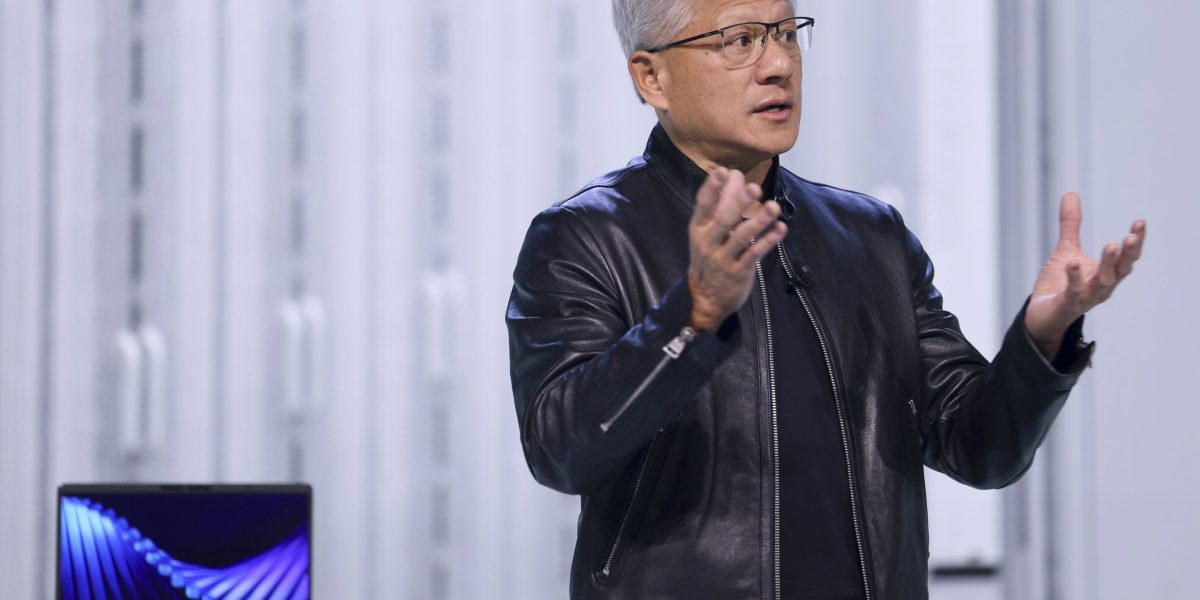
Nvidia Q1 FY27: $81.6B revenue, +85% YoY — and the stock closes down 1.8%
Every line beat consensus, guidance went up, the dividend got hiked, an $80B buyback was authorized — and shares still slipped because the bar was pre-priced.
Nvidia Q1 FY27: $81.6B revenue, +85% YoY — and the stock closes down 1.8%
Every line beat consensus, guidance went up, the dividend got hiked, an $80B buyback was authorized — and shares still slipped because the bar was pre-priced.
- Revenue $81.6B vs. $78.9B consensus; net income $58.3B vs. $42.9B expected; EPS $1.87 diluted vs. $1.76.
- Data Center segment: $75.2B, +92% YoY, +21% sequentially — Blackwell 300 is the volume driver.
- Stock closed -1.8% on May 21 despite the beat — sellers booked the news after a strong hyperscaler earnings season had already priced it in.
- 2026 big-tech AI capex on track to clear $700B vs. ~$400B in 2025, led by Microsoft and Meta.
Implications: "Even a perfect Nvidia print can't move the stock anymore" is the May 21 narrative. Leadership in AI compute is widening to AMD (+114% YTD on the back of the $60B Meta deal), Intel, Micron and hyperscaler custom silicon — a multipolar AI silicon market is becoming the new default for software vendors to plan against.

AMD +114% YTD as the $60B Meta deal anchors a new AI silicon narrative
A six-gigawatt, five-year AMD-Meta agreement reshapes the AI chip pecking order — Wall Street's chip favorites are visibly rotating from Nvidia toward the broader ecosystem.
AMD +114% YTD as the $60B Meta deal anchors a new AI silicon narrative
A six-gigawatt, five-year AMD-Meta agreement reshapes the AI chip pecking order — Wall Street's chip favorites are visibly rotating from Nvidia toward the broader ecosystem.
- Multi-year, six-gigawatt AMD-Meta agreement worth roughly $60B over five years.
- Deploys custom AMD Instinct MI450 GPUs and 6th-gen EPYC "Venice" CPUs starting H2 2026.
- AMD Q1 2026: $10.25B revenue, +38% YoY; current-quarter guidance points to +46% growth.
- AMD stock up 114% YTD; CNBC reports Wall Street's chip narrative shifting toward Intel, Micron and broader silicon names.
Implications: Multi-vendor compatibility is the new table stakes for any software vendor building on accelerators. The "Nvidia-only" hyperscaler era is closing; expect AMD to lock at least one more nine-figure hyperscaler deal before end of year.