
Anthropic acquires Stainless to own the SDK/MCP layer that connects Claude to everything
The four-year-old API tooling startup behind Anthropic's own SDKs joins the platform engineering org — a bet that "agent connectivity" is the next moat after model quality.
Anthropic acquires Stainless to own the SDK/MCP layer that connects Claude to everything
The four-year-old API tooling startup behind Anthropic's own SDKs joins the platform engineering org — a bet that "agent connectivity" is the next moat after model quality.
- Stainless generates SDKs, CLIs and MCP servers from OpenAPI specs in TypeScript, Python, Go, Java and other languages — Anthropic has shipped on Stainless tech "since the earliest days" of its API.
- Acquisition rolls Stainless founder/CEO Alex Rattray and team into Anthropic's Platform Engineering group under Katelyn Lesse to accelerate Claude's MCP (Model Context Protocol) ecosystem.
- Deal terms not disclosed; Stainless customers and product continue, but its roadmap now serves Claude-first developer experience.
- Strategically reframes Claude not just as a model, but as a developer surface — the same playbook OpenAI is running with its acquisitions of Windsurf and IO.
"Agents are only as useful as what they can connect to. We're excited to bring the Stainless team into Anthropic to advance Claude's ability to connect to data and tools."
— Katelyn Lesse, Head of Platform Engineering, Anthropic
Stainless quietly powered the SDKs that most Claude API users actually touch — TypeScript, Python, Go, Java — so this is less a "new capability" and more Anthropic reclaiming the interface layer between Claude and the long tail of integrations. Pairing that with MCP, which has become the de facto standard for tool/context plumbing for agents, makes the bet explicit: if Claude wins, it wins partly because every other agent stack still routes through its plumbing.
Implications: Expect tighter Claude × MCP × SDK release trains, fewer "open spec, third-party SDK" gaps, and pressure on OpenAI's Codex/Agents SDK pipeline to match velocity. Watch for Stainless's external SDK customers to be treated as a distribution channel rather than a side hustle.

KPMG rolls Claude out to 276,000 employees across 138 countries
Strategic alliance embeds Claude in Digital Gateway, KPMG Blaze and Managed Agents — including being the preferred model for KPMG's PE portfolio deployments.
KPMG rolls Claude out to 276,000 employees across 138 countries
Strategic alliance embeds Claude in Digital Gateway, KPMG Blaze and Managed Agents — including being the preferred model for KPMG's PE portfolio deployments.
- Claude is embedded in Digital Gateway, the platform KPMG uses for client work — making it the default reasoning layer for tax, legal, audit, and cyber tooling.
- KPMG becomes Anthropic's preferred deployment partner for private equity portfolio companies and will co-build PE-focused products.
- KPMG Blaze (code modernisation) and Cowork + Managed Agents are explicit launch surfaces — compressing tax-regulation tool builds "from weeks to minutes."
- Lands on top of Anthropic's recent Claude for Small Business + Gates Foundation tracks — together pointing at a deliberate enterprise + verticals + civic push.
"They're rolling Claude out to 276,000 people and using it for client work. That's what firm-wide AI commitment looks like."
— Daniela Amodei, President, Anthropic
Implications: Big-4 consulting is becoming a primary distribution channel for frontier models — and KPMG just picked a side. Expect tax/audit-specific Claude verticals, and pressure on PwC (also an Anthropic partner) and Deloitte/EY to clarify their own model alignments.

Anthropic widens the alignment conversation to clergy, ethicists and philosophers
A new program ships an experimental in-tool "ethical reminder" for Claude — early evals show "markedly lower" misaligned behaviour when the reminder fires mid-task.
Anthropic widens the alignment conversation to clergy, ethicists and philosophers
A new program ships an experimental in-tool "ethical reminder" for Claude — early evals show "markedly lower" misaligned behaviour when the reminder fires mid-task.
- Anthropic is consulting scholars and clergy across 15+ traditions on virtue, character and moral formation — to shape how Claude's "character" is trained, not just its policies.
- Concrete artefact: a tool that Claude can call mid-task to reflect on its values; alignment evaluations show "markedly lower rates of misaligned behavior" when it's available.
- Next cohort: legal scholars, psychologists, writers and civic institutions to address how AI reshapes work, institutions and power distribution.
Implications: A rare concrete safety artefact (the in-context ethical reminder) ships with the philosophy — and it's measurable. Worth watching for whether other labs adopt similar self-reflection tool-call patterns as a cheap alignment lever.
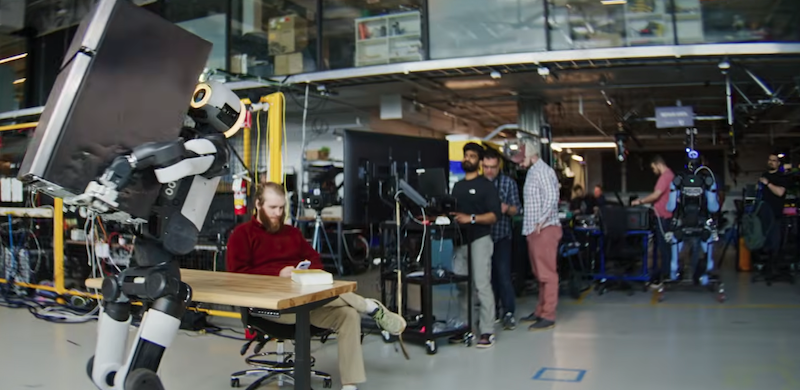
Atlas leans into the load: Boston Dynamics releases new heavy-lift footage
Electric Atlas now lifts and walks with 50-lb mini-fridges (and tested loads over 100 lb) by leveraging whole-body dynamics learned through GPU-parallel RL.
Atlas leans into the load: Boston Dynamics releases new heavy-lift footage
Electric Atlas now lifts and walks with 50-lb mini-fridges (and tested loads over 100 lb) by leveraging whole-body dynamics learned through GPU-parallel RL.
- Atlas uses its whole body — not just arms — to anticipate weight, lean in and stabilise; the same recipe scales from 50 lb appliances to 100+ lb loads.
- Policy trained by reinforcement learning on "millions of hours" of GPU-parallel simulation, then transferred to the physical robot.
- Hardware enables the trick: all-electric design, only two actuator types, symmetrical limbs, infinite-rotation joints and field-replaceable components keep the sim-to-real gap narrow.
- Comes amid an accelerating industrial-humanoid race: Tesla, Figure, Agility, 1X Technologies and Unitree all ramping commercial deployments in parallel.
"You cannot lift a fridge just by looking at it and using your hands. You have to prepare for it, anticipate the weight, lean into it, and let your body do the work."
— Boston Dynamics Atlas team
Implications: Industrial humanoids are moving past pick-and-place; whole-body manipulation is the new bar. If RL-on-GPU policies generalise this cleanly from 50 lb to 100+ lb, the cost-per-payload curve for warehousing and appliance logistics shifts faster than 2024-era forecasts assumed.
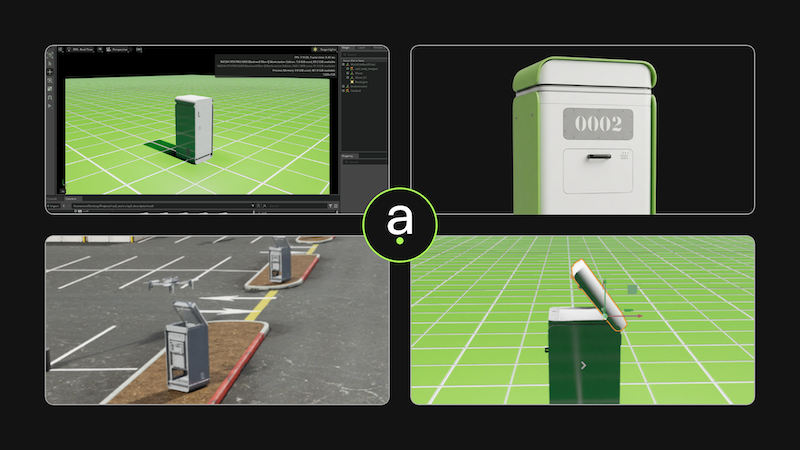
Arrive AI puts its autonomous delivery network on Nvidia Isaac Sim + Blackwell GPUs
CEO Dan O'Toole bets the company's CV stack and last-mile drone logistics on simulation-first training — physics-accurate, ray-traced, GPU-scaled.
Arrive AI puts its autonomous delivery network on Nvidia Isaac Sim + Blackwell GPUs
CEO Dan O'Toole bets the company's CV stack and last-mile drone logistics on simulation-first training — physics-accurate, ray-traced, GPU-scaled.
- Adopts Nvidia Isaac Sim as the primary training environment for its computer-vision and robotics stack — gravity, friction, collisions and ray-traced lighting simulated end-to-end.
- Runs the workloads on Blackwell-class GPU workstations, leaning on extensive VRAM and dedicated RT cores to render photorealistic synthetic data at scale.
- Targets last-mile autonomous drone delivery — a segment where regulators reward simulation-validated systems and physical pilots are slow/expensive.
- Lands the same week as Boston Dynamics' RL-trained Atlas demo, reinforcing that GPU-accelerated sim is becoming the default substrate for physical-AI training, not a side technique.
"Simulation is becoming the foundation of modern AI development. By leveraging Nvidia Isaac Sim and next-generation GPU infrastructure, we can train and refine our computer vision and robotics systems at a speed and scale that simply isn't possible in the physical world alone."
— Dan O'Toole, Founder & CEO, Arrive AI

Pentagon awards Perennial Autonomy up to $500M for AI-enabled counter-drone fleets
Three-year deal with Joint Interagency Task Force 401 covers Merops air-to-air interceptors, Bumblebee quadcopters and the Hornet strike drone — some already deployed in CENTCOM AOR.
Pentagon awards Perennial Autonomy up to $500M for AI-enabled counter-drone fleets
Three-year deal with Joint Interagency Task Force 401 covers Merops air-to-air interceptors, Bumblebee quadcopters and the Hornet strike drone — some already deployed in CENTCOM AOR.
- Joint Interagency Task Force 401 (JIATF 401) is the awarding body; the deal targets "lower-cost drone intercept systems" for domestic and overseas force protection.
- Platforms blend computer vision, RF sensing, and jam-resistant comms; humans keep authority over lethal force.
- Some platforms are already operational in U.S. Central Command's area of responsibility — this scales them up rather than introducing them.
- Lands the same day as Shield AI's Pentagon selection for LUCAS, underscoring how fast DoD is converging on AI-stacked, attritable autonomy.
Implications: The half-billion ceiling, combined with the three-year repeat-orders cadence, is the kind of contracting shape startups have been begging for — predictable scale without single-system lock-in. Expect more JIATF-style umbrella awards as DoD shifts from one-off SBIR pilots to fleet-class counter-UAS procurement.
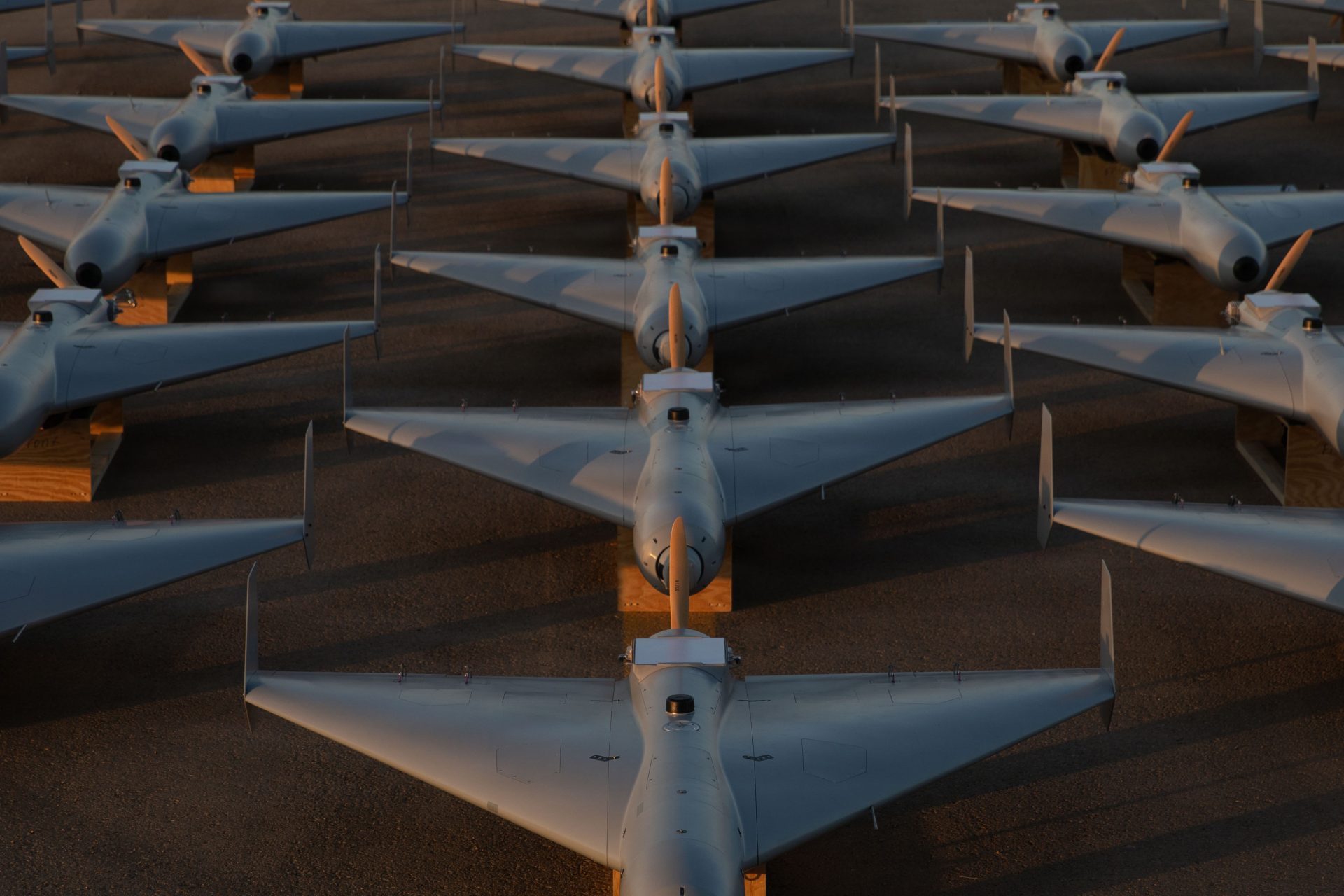
Pentagon picks Shield AI's Hivemind to fly LUCAS attack-drone swarms autonomously
Hivemind goes onto the Low-Cost Unmanned Combat Attack System — already used in Operation Epic Fury — to let one operator command a swarm of "tens-of-thousands-of-dollars" one-way attack drones.
Pentagon picks Shield AI's Hivemind to fly LUCAS attack-drone swarms autonomously
Hivemind goes onto the Low-Cost Unmanned Combat Attack System — already used in Operation Epic Fury — to let one operator command a swarm of "tens-of-thousands-of-dollars" one-way attack drones.
- LUCAS is a one-way attack drone modeled after Iranian designs and built around a mid-to-low-tens-of-thousands-of-dollars price point; first combat use was in U.S. strikes against Iran during Operation Epic Fury.
- Shield AI's Hivemind becomes the autonomy stack: dynamic re-planning, obstacle avoidance and on-the-fly task execution, with one human operator supervising the swarm rather than each drone.
- Capability demonstration targeted for fall 2026; the company would not confirm whether the selection sits under an existing contract vehicle.
- Sits alongside Anduril and Palantir as part of DoD's broader push to push frontier-AI autonomy onto attritable platforms at the tactical edge.
"Teams of autonomous systems working together in dynamic and communications-constrained environments under the supervision of a single operator."
— Shield AI, on Hivemind + LUCAS
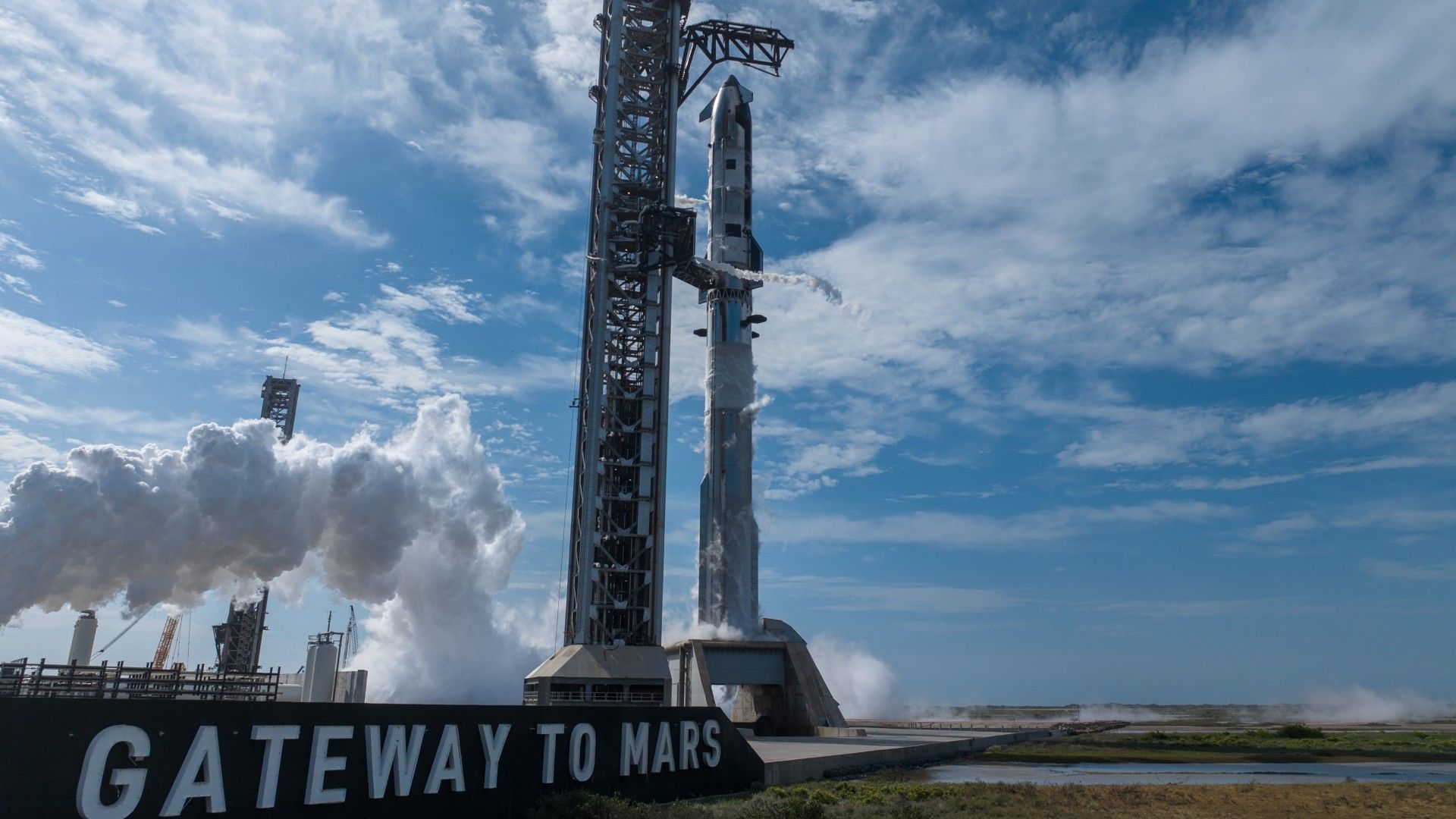
Starship V3 cleared for maiden flight tonight after clean wet-dress at Pad 2
SpaceX completed a full tanking simulation on May 20 and is targeting Flight 12 — the first V3 stack — for a 90-minute window opening 6:30 p.m. EDT today from Starbase Pad 2.
Starship V3 cleared for maiden flight tonight after clean wet-dress at Pad 2
SpaceX completed a full tanking simulation on May 20 and is targeting Flight 12 — the first V3 stack — for a 90-minute window opening 6:30 p.m. EDT today from Starbase Pad 2.
- First flight of the V3 stack: Booster 19 + Ship 39, with a host of redesigned avionics, plumbing and heatshield work over V2.
- SpaceX ran a full simulated countdown with cryogenic liquid oxygen and liquid methane on May 20; Starbase was closed 06:30–14:00 EDT to support it.
- Mission profile: Booster does an offshore landing burn in the Gulf (no return-to-launch-site catch), Ship goes suborbital and splashes in the Indian Ocean, deploying ~22 Starlink simulators plus two onboard camera probes.
- First Starship launch in seven months and the first of 2026 — a critical data point for Artemis 4's HLS timeline and SpaceX's reusability claims.
Implications: A clean V3 flight resets the political and program risk on Artemis lunar timelines. A scrub or anomaly tonight reignites the "Starship is behind schedule" narrative just as Boeing and Blue Origin push their own crewed-lunar architectures.

Starlink 17-42: 24 satellites up, 612th booster landing for SpaceX
Falcon 9 B1103 (second flight) lofts another batch from Vandenberg and lands on Of Course I Still Love You; Starlink constellation now over 10,000 spacecraft.
Starlink 17-42: 24 satellites up, 612th booster landing for SpaceX
Falcon 9 B1103 (second flight) lofts another batch from Vandenberg and lands on Of Course I Still Love You; Starlink constellation now over 10,000 spacecraft.
- Liftoff at 7:46 p.m. PDT / 02:46 UTC from SLC-4E at Vandenberg SFB; 24 broadband satellites delivered to low Earth orbit.
- Booster B1103 landed on drone ship Of Course I Still Love You — 197th landing on that vessel and 612th overall for SpaceX.
- Constellation now exceeds 10,000 active Starlink spacecraft, with more than 600 supporting direct-to-device service.
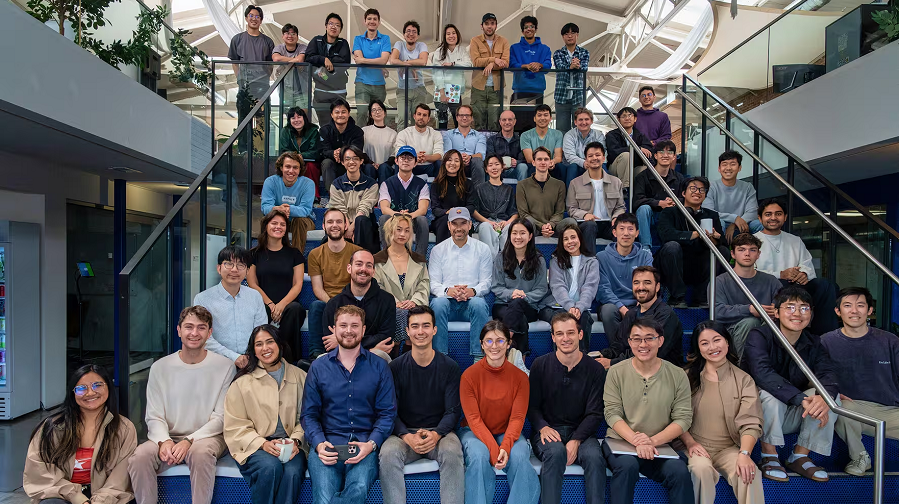
Exa Labs raises $250M Series C led by a16z at $2.2B — search infrastructure built for AI agents
San Francisco's neural-search startup more than triples its valuation in eight months as 400,000+ developers and 5,000+ companies route agent searches through its index.
Exa Labs raises $250M Series C led by a16z at $2.2B — search infrastructure built for AI agents
San Francisco's neural-search startup more than triples its valuation in eight months as 400,000+ developers and 5,000+ companies route agent searches through its index.
- Round led by Andreessen Horowitz; valuation more than triples from $700M last fall (an $85M raise) to $2.2B in ~8 months.
- Product surface: Exa Instant (sub-180 ms queries), Contents (full-page text retrieval) and Exa Agent (multi-step search workflows) — designed for AI consumers, not humans.
- Customer base: 400,000+ developers and 5,000+ companies including HubSpot, Cursor, Cognition, OpenRouter and Monday.com.
- Funds will train Exa's next-gen embedding/search models and scale to "hundreds of thousands of searches per second" on custom vector DBs running on Nvidia GPU clusters.
"Most other search providers actually wrap other search engines and therefore cannot compete on quality / latency / cost."
— Will Bryk, CEO, Exa Labs
Implications: The "search layer for agents" is becoming an own-the-index game — Exa is now the clearest a16z-backed bet against Google as the default retrieval substrate for agentic workflows. Pairs with Parallel's recent $230M round to confirm agent-search infra as a thematic VC priority for 2026.

Mercury raises $200M Series D at $5.2B — positioning as the bank for AI startups
TCV-led round comes with $650M annualised revenue, four straight profitable years, and a freshly granted OCC conditional approval for a national bank charter.
Mercury raises $200M Series D at $5.2B — positioning as the bank for AI startups
TCV-led round comes with $650M annualised revenue, four straight profitable years, and a freshly granted OCC conditional approval for a national bank charter.
- Lead: TCV. Participation: Andreessen Horowitz, Coatue, CRV, Sapphire Ventures, Sequoia Capital and Spark Capital.
- Customers include Lovable, ElevenLabs and Supabase — Mercury is overtly leaning into AI-native companies as its growth segment.
- Four consecutive years of GAAP and EBITDA profitability — a rare combination for a fintech of this scale in 2026.
- April 2026 OCC conditional approval to charter Mercury Bank unlocks direct federal oversight and expanded product lines (lending, treasury, deposits).
"AI is compressing the time between an idea and an actual business."
— Immad Akhund, CEO, Mercury

Rely closes $4.5M seed to put AI-native diligence on multifamily real estate deals
2048 Ventures leads a small-but-pointed seed for a workflow that auto-audits leases, rent rolls, contracts and financials for multifamily acquisitions.
Rely closes $4.5M seed to put AI-native diligence on multifamily real estate deals
2048 Ventures leads a small-but-pointed seed for a workflow that auto-audits leases, rent rolls, contracts and financials for multifamily acquisitions.
- $4.5M seed led by 2048 Ventures; capital scales the platform's diligence automation across leases, rent rolls, contracts and financial documents.
- Pitch: collapse weeks of analyst pass-throughs into hours, with AI-flagged anomalies for human reviewers — classic verticalised-autonomy thesis.
- Lands in a week where Mercury and Exa hoover up headlines — useful reminder that early-stage AI-native vertical workflows are still getting funded.
Nvidia Q1 FY27: $81.6B revenue, 25× dividend hike, $80B buyback — Huang calls it "the largest infrastructure expansion in human history"
Data Center hits $75.2B (+92% YoY), Q2 guidance comes in at $91B, and the board signals a regime change on capital return — $20B already back to shareholders in the quarter.
Nvidia Q1 FY27: $81.6B revenue, 25× dividend hike, $80B buyback — Huang calls it "the largest infrastructure expansion in human history"
Data Center hits $75.2B (+92% YoY), Q2 guidance comes in at $91B, and the board signals a regime change on capital return — $20B already back to shareholders in the quarter.
- The print: $81.6B revenue, 85% YoY / 20% QoQ; GAAP diluted EPS $2.39, non-GAAP $1.87. Net income $58.3B for the quarter.
- Mix: Data Center revenue $75.2B (+92% YoY); Edge / "other compute" $6.4B (+29% YoY). Hyperscalers still ~half of Data Center.
- Margins: GAAP gross margin 74.9% / non-GAAP 75.0% — landing essentially on consensus and avoiding the bear-case "sub-74.5%" scenario.
- Capital return regime change: Quarterly dividend raised from $0.01 to $0.25 (25×) effective June 26; board authorised an incremental $80B in buybacks; total Q1 returns to shareholders ~$20B.
- Q2 guidance: $91B ±2% revenue; non-GAAP gross margin 75.0% ±50bps; non-GAAP opex ~$8.3B — signalling continued acceleration, not deceleration.
"The buildout of AI factories — the largest infrastructure expansion in human history — is accelerating at extraordinary speed."
— Jensen Huang, CEO, NVIDIA
Three things stand out beyond the headline beat. First, Data Center at $75B in a single quarter is roughly the size of all of Nvidia's total annual revenue two years ago — the curve has not bent. Second, raising the dividend 25× and authorising another $80B in buybacks is a deliberate signal that Nvidia is now run with a mature capital-return policy on top of a hypergrowth business, not just as a hyper-growth story. Third, guiding Q2 to $91B explicitly tells the buy-side that the AI capex cycle has not yet rolled over; the implied operating leverage is enormous.
Implications: Hyperscalers spending behaviour gets re-rated — if Nvidia can guide $91B, the read-through into Microsoft, Meta, Google and Oracle capex is upward, not flat. The dividend signal also matters: it lowers the "Nvidia might cut" tail risk for income-mandate funds, expanding the buyer base. Watch the open today: pre-print, options were pricing a ±10% implied move.